

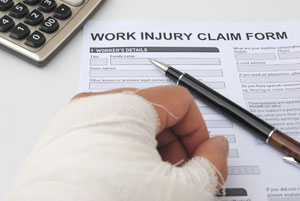
 Workers’ compensation programs have been instituted in all fifty states, including New Jersey, to provide a streamlined process for injured workers to obtain benefits to cover lost wages and medical expenses. Unfortunately, a large percentage of claims, including many legitimate claims, are initially denied by workers’ compensation insurance companies. There are some valid reasons why a workers’ compensation claim will be denied:
- The injury was not work-related
- You didn’t report the claim within the period of time required by law
- The injury may not be one that is covered by workers’ compensation—for example, some states don’t allow coverage of psychological injuries, including stress-related clai
- The injuries are not serious enough to prevent you from working
If none of the above situations applies and your claim has been denied, you are not necessarily out of luck. Every state, including New Jersey, has a process by which you can appeal the denial of a workers’ compensation claim. Often, you will find specific instruction on how to appeal the denial in the denial letter itself.
Before filing any formal appeal, you should contact the insurance company that provides workers’ compensation coverage for your employer. The denial may have been a mistake, or may have been based on erroneous or incomplete information.
In New Jersey, there are two ways you can appeal the denial of a work comp claim. To obtain a formal hearing, you must file what is known as a “claim petition.” An informal hearing may be arranged by submitting an Application for an Informal Hearing.”
The informal hearing process typically moves faster. Once you file your application, you will be assigned to a workers’ compensation judge and will receive notice of a hearing date. If you are unsatisfied with the judge’s ruling, you may still file a formal claim petition and seek a formal hearing.
When you request a formal hearing, you will be assigned to a “judge of compensation,” and will also be scheduled with a hearing date. However, that hearing may not take place for six months or more. In addition, the hearing will look more like a trial than a conversation (the informal hearing usually involves the judge asking questions of both parties). The formal hearing may include witnesses, as well as documentary evidence.
Contact Taylor & Boguski
At Taylor & Boguski, we bring more than 70 years of combined legal experience to injured people throughout New Jersey. For a free initial consultation, contact our office online or call us at 856-234-2233.
 Uber, the fabulously successful “rideshare” service that’s sweeping the nation, faces a potentially catastrophic legal challenge—at least two lawsuits have been filed against the company seeking to identify drivers as employees rather than independent contractors. If the lawsuits are successful, Uber and its competitors, such as Lyft, will be required to provide workers’ compensation benefits to thousands of drivers across the country.
 Post-traumatic stress disorder (PTSD) claims related to the workplace are on the rise across the United States. For some workers, PTSD can arise as a normal part of the job—a firefighter, emergency room doctor or nurse, or EMT may be exposed to a particularly horrifying accident or injury. Workers in extremely dangerous occupations—construction workers, maritime workers, police officers—may witness the death or serious injury of a co-worker. Sometimes, the violence that triggers PTSD may be wholly unrelated to the job, as in the increasing instances of gun violence in schools and businesses.
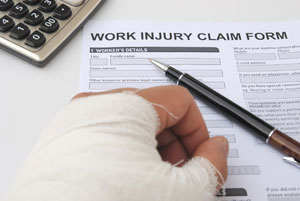 Every state, including New Jersey, has workers’ compensation laws, designed to provide benefits to people who have been hurt on the job. Workers’ compensation programs are designed to be a compromise for both employees and employers, eliminating the need for an injured worker to incur the time and expense of a lawsuit, and simultaneously shielding employers from exorbitant jury awards. Worker’s compensation benefits are typically designed to address instances where the employer was careless or negligent in some respect. But what if you are an injured worker, and the accident was caused in part by your own negligence? Can you be denied benefits?
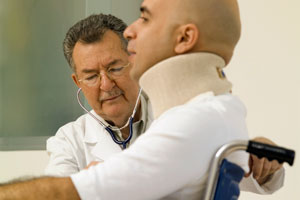 In New Jersey, when you have suffered injury or illness because of work conditions, you have the right to pursue benefits for medical expenses and lost wages. The process, however, can be confusing and intimidating—many legitimate claims are initially denied.
 As in all states, when you suffer a workplace injury in New Jersey, you have a right to pursue benefits under the state’s workers’ compensation laws. You must notify your employer in a timely manner, and you must submit to a physical examination from a doctor chosen by your employer. If your claim is approved, though, you may be entitled to receive a broad range of benefits.
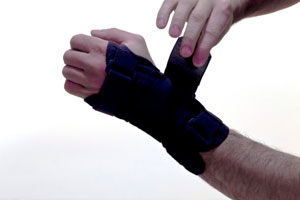 Under the laws of New Jersey, when you are hurt during the course of employment, you have a right to pursue monetary compensation for lost wages, medical expenses and even job retraining, if you can’t return to your previous job. The injury, though, does not have to arise from a single traumatic event—a fall or the malfunction of a machine or tool. Often, the most debilitating injuries are those that develop over time, from standing, bending, lifting, squeezing or pinching over and over and over.
  Serious, catastrophic job-related injuries may qualify you for temporary total, temporary partial, permanent total, or partial disability benefits. If your injuries prevent you from returning to work, you may be eligible to receive one of the following kinds of
 An employee left unable to work due to a workplace injury is in a difficult situation, but may still have options to collect an income to support him or herself.

 Subscribe to RSS feed
  Our Facebook page
 Follow us on Twitter
 Linkedin Profile